
Any out-of-home estate.
The formats differ. The journey from discovery to collection does not.
Digital screens sold by day or month across a network, with content scheduling and campaign monitoring already defined as services against the asset template.
A large estate across cities, sold by site and fortnight. Inventory, availability and occupancy are the whole business — and the proposal has to be built from real assets.
High asset counts, repeated formats and heavy field work. Templates carry the printing, fabrication and installation tasks so every deal inherits them, and QR identity keeps site visits on the record.
Static and digital together, with a sales team that needs the commercial picture and an operations team that needs the delivery one.
Make your DOOH inventory discoverable.
Give buyers a modern way to discover selected advertising inventory while media owners remain in control of what is publicly visible.
- Media owners control which assets are publicly visible
- Search and filter available inventory
- Explore inventory by location, with map discovery where coordinates exist
- View asset specifications, availability and relevant pricing
- Request a proposal directly from an opportunity
Give every physical asset a digital identity.
QR codes connect a physical DOOH asset with its digital record, so what happens in the field lands against the right asset.
- A unique QR identity per asset
- Fast identification by field engineers
- The correct asset record opened from the field
- Maintenance reported against the identified asset
- Incidents reported against the identified asset
Connect campaigns with work on the ground.
Keep the operational activities needed to prepare and deliver campaigns visible, and connected to the business context they belong to.
- Operational activities and tasks
- Outstanding work visibility
- Campaign execution activities
- Asset-linked field activity
- QR-supported maintenance and incident reporting
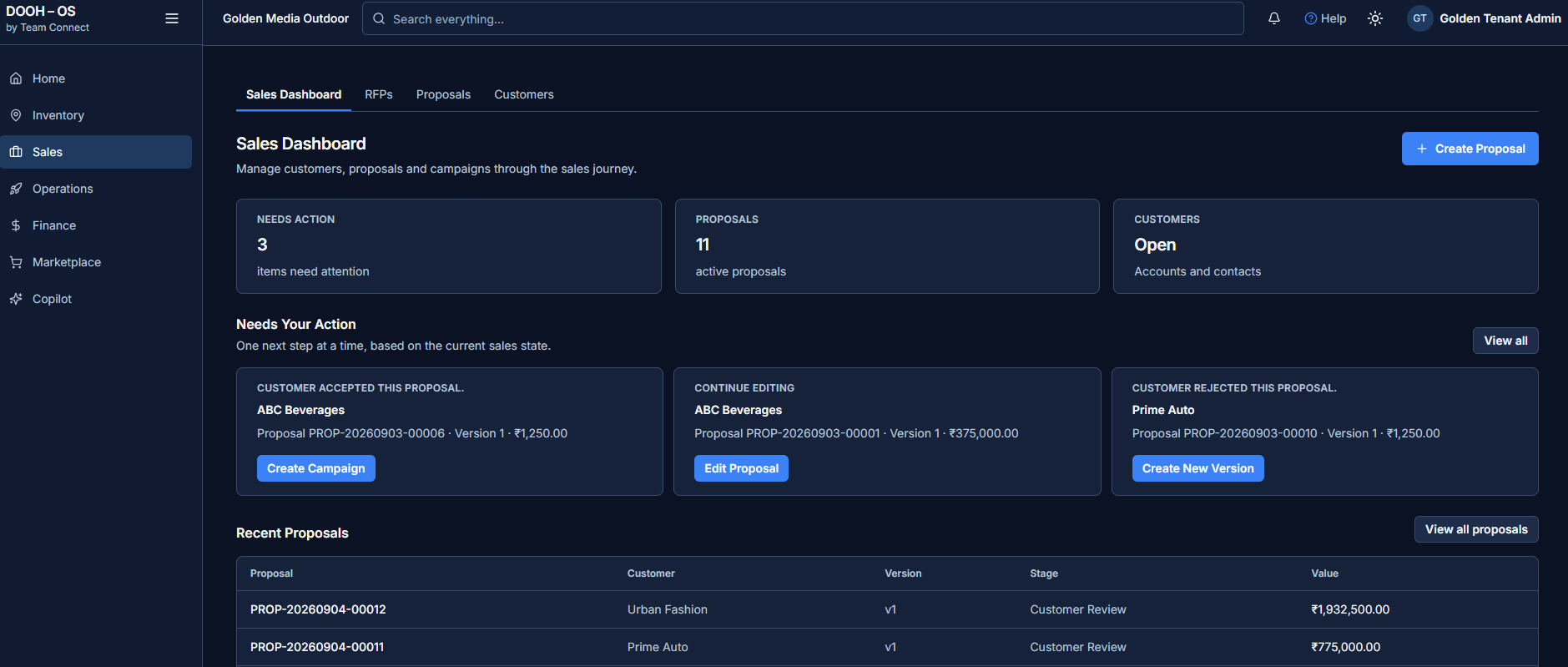
Eight reasons it holds together.
Each one is a property of the platform, not a promise about it.
Media owners decide which inventory is publicly discoverable.
Assets sit on a map wherever latitude and longitude are recorded.
QR codes connect physical assets with digital records for field teams.
RFP, proposal, campaign and invoice records connect to one another.
Templates, services and tasks standardize how inventory is configured and delivered.
Campaigns expose assets, readiness, outstanding tasks and progress.
Commercial records connect through campaign and invoice relationships.
Inventory, sales, execution and finance in one operating environment.
See OOHYantra in action.
Explore how Team Connect can simplify the way your DOOH business manages inventory, sales, campaigns, operations and finance — on a walkthrough using your own formats.
Request a Demo →